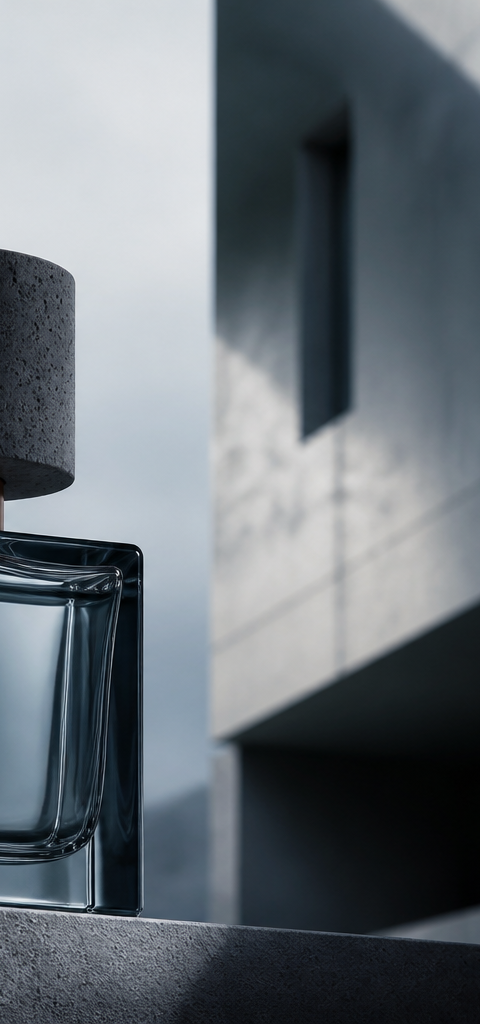
The Brutalist Perfumer: Why Scent is the New Architecture
Moving beyond floral tropes, a new wave of olfactory artists is using notes of concrete, hot asphalt, and industrial ozone to map our urban identity.
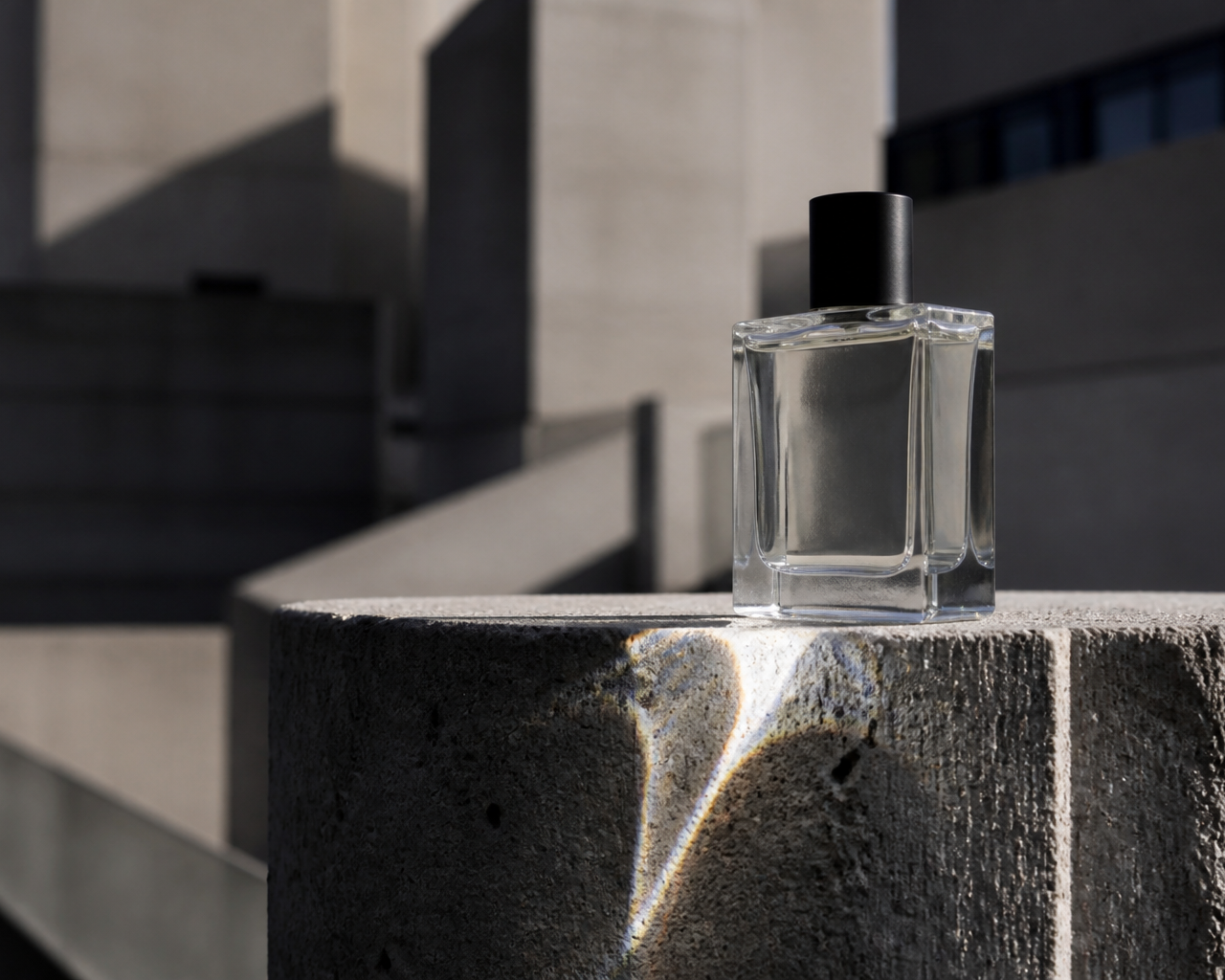
The Smell of the Scaffold: A New Sensory Language
Standing in the middle of London’s Barbican Centre, one does not usually think of lavender or citrus. You think of the damp weight of exposed concrete, the sharp metallic tang of rainwater hitting rusted rebar, and the strangely comforting hum of the ventilation system. For decades, the perfume industry ignored these textures, preferring the escapism of rose gardens and Mediterranean shores. But a quiet revolution is taking place in the laboratories of Paris, London, and Brooklyn. A new generation of 'Brutalist' perfumers is asking: Why shouldn't a fragrance smell like a city?
This isn't just about technical oddity. It is about a fundamental shift in how we perceive our environment. In an age of digital sterility, we are craving the tactile and the visceral. We are looking for scents that ground us in the reality of the built environment.
The Rise of Industrial Olfaction
Traditional perfumery followed the 'Pyramid of Needs'—top notes of fleeting freshness, heart notes of blossoms, and base notes of woods or resins. The new school, led by houses like Comme des Garçons, Heeley, and Andrea Maack, throws this out in favor of linear, atmospheric constructions. They use molecules like Iso E Super, Ambroxan, and Cetalox not as enhancers, but as primary subjects to mimic the smell of stone, glass, and ink.
"Perfume is the most invisible form of architecture. It occupies a room and defines boundaries just as effectively as a wall of raw concrete, yet it exists entirely within the mind of the observer."
This movement reflects a broader cultural obsession with Brutalism and the aesthetics of the mid-century. Just as we have learned to love the stark beauty of a monolithic housing block, we are learning to appreciate the 'beautiful-ugly' notes of industrial life.
Why are we attracted to 'Anti-Perfumes'?
The psychological phenomenon behind this is known as olfactory grounding. In a world that feels increasingly simulated, the smell of hot asphalt (recreated using cresol and birch tar) or the metallic sting of an elevator shaft provides a sense of place. It is the antithesis of the 'clean girl' aesthetic; it is messy, structured, and profoundly human.
Comparing the Classics to the Contemporaries
To understand this shift, one must look at how the 'compositional brief' has changed. Below is a comparison of traditional luxury scents versus the new 'Urban Brutalist' approach.
| Feature | Traditional Luxury Perfume | Brutalist/Urban Perfume |
|---|---|---|
| Primary Goal | Flattery and Seduction | Atmosphere and Memory |
| Core Imagery | Tropical Islands, Royal Gardens | Subway Tunnels, Construction Sites |
| Synthetic Usage | Hidden to mimic nature | Celebrated as industrial art |
| Texture | Soft, Powdery, Velvet | Gritty, Metallic, Linear |
| Representative Note | Jasmine / Sandalway | Concrete / Ozone / Rubber |
The Molecular Toolkit of the Urban Architect
How does one actually bottle the smell of a city? It requires a mastery of synthetic chemistry that moves beyond the natural palette.
- Geosmin: The chemical responsible for the smell of wet earth and stones. In an urban context, it mimics the scent of a damp park or a basement.
- Styrax: A resin that can be manipulated to smell like burnt rubber or fresh motor oil.
- Safraleine: A molecule that gives off a distinct 'black leather' and 'suede' vibe with a metallic edge.
- Aldehydes (C-12): Used to create the sensation of cold air, static electricity, and fluorescent lighting.
The Significance of 'Non-Places'
Anthropologist Marc Augé famously coined the term 'non-places' to describe transit hubs, airports, and motorways—spaces where we remain anonymous. These used to be considered scentless voids. Now, perfumers are capturing these transitions. A scent that mimics the cold air of an airport terminal at 3:00 AM isn't just a gimmick; it's a study in modern solitude.
How to Wear a Built Environment
For the uninitiated, wearing a scent that smells like crushed flint or photocopy toner can be daunting. However, these fragrances often act as 'skin scents.' Because they rely heavily on large-molecule synthetics, they don't project like a floral bomb. Instead, they create a 'personal aura' that interacts uniquely with the wearer's skin chemistry.
"The modern wearer doesn't want to smell like a flower; they want to smell like the memory of a place they've never been, or perhaps a city they've lost."
| Perfume House | Notable 'Urban' Scent | Key Structural Note |
|---|---|---|
| Comme des Garçons | Odeur 53 | Nail Polish / Burnt Rubber |
| Heeley | L'Amandière | Green Wheat / Wet Grass (Urban Park) |
| Andrea Maack | Craft | Cold Metal / Ice |
| Room 1015 | Electric Wood | Electric Guitar / Dust |
The Future: Scenting the Smart City
As we look toward the future of Urban Design, olfaction is becoming a tool for architects. We are seeing malls and corporate headquarters using 'signature scents' to influence mood, but the avant-garde is pushing back. They are creating scents that highlight the friction of city life—the smell of the crowd, the steam of the street, the electricity of the grid.
These scents serve as a reminder that we are physical beings in a physical world. By wearing the smell of the city, we are claiming our place within its steel and stone walls.
Frequently Asked Questions (FAQ)
What does 'Brutalist' perfume actually smell like?
It typically features notes that evoke man-made materials: concrete, dry plaster, cold metal, rubber, and industrial chemicals. It is characterized by a lack of traditional sweetness and a focus on 'mineral' or 'atmospheric' textures.
Are these scents wearable in professional settings?
Surprisingly, yes. Many industrial scents rely on 'clean' synthetics that smell more like fresh laundry or crisp air than 'dirty' city smells. They are often less intrusive than heavy orientals or sweet gourmands.
Is this just a trend for hipsters?
While popular in niche circles, the technology behind these scents—like headspace technology to capture the air of specific buildings—is being integrated into mainstream luxury brands as they seek to stand out in a saturated market.
Where can I experience these scents?
Niche boutiques like Scent Bar (Los Angeles/NYC) or Liberty London carry extensive libraries of these avant-garde houses. Look for 'Mineral' or 'Industrial' categories.
“Perfume is the most invisible form of architecture, occupying a room and defining boundaries like a concrete wall.”
Frequently asked questions
- What is Brutalist perfumery?
- It is a niche movement focused on 'industrial' and 'mineral' scents—notes like concrete, asphalt, and cold metal—rather than traditional florals or woods.
- Why would anyone want to smell like concrete?
- It offers 'olfactory grounding.' These scents evoke specific memories of urban life and provide a sophisticated, minimalist alternative to mass-market perfumes.
- Which chemicals are used to create industrial scents?
- Common molecules include Geosmin (wet earth/stone), Iso E Super (velvety wood/cedar), and various Aldehydes (cold air/metallic effects).