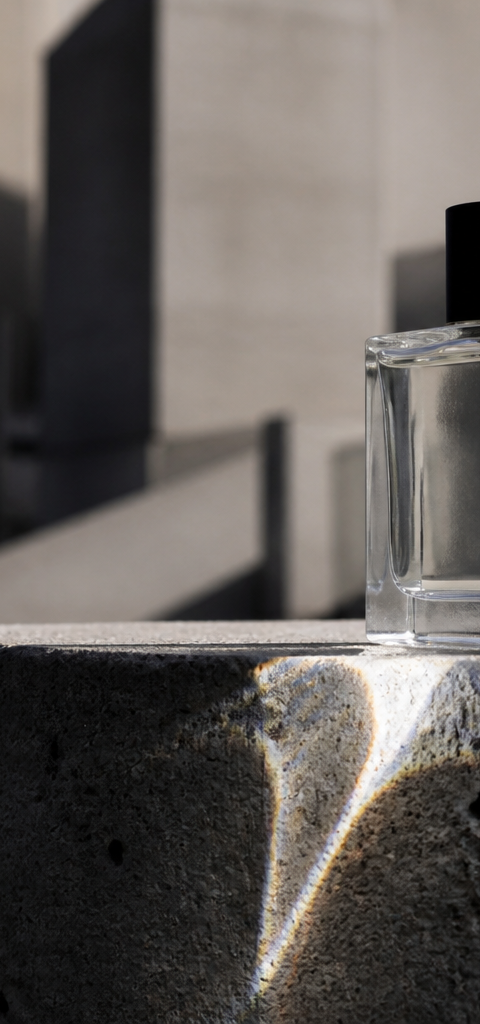
The Brutalist Perfumer: Olfactory Architecture and Urban Decay
How a new wave of scent makers is capturing the scent of wet concrete, rusted rebar, and the static of the metropolis.
The Scent of Gray Matter: Why the City is the New Secret Garden
In a small, windowless laboratory in East London, the air does not smell like jasmine or bergamot. Instead, it smells sharply of petrichor hitting a hot sidewalk, the metallic tang of an underground rail line, and the chalky, cold mineral dust of a construction site. This is the workspace of the 'anti-perfumer,' a growing cohort of scent designers who are trading the pastoral fantasies of 19th-century French perfumery for the jagged, uncompromising realities of brutalism.
For decades, the luxury fragrance industry was built on an aspirational lie: that we all want to smell like a Grasse rose garden at dawn. But as our lives become increasingly tethered to concrete jungles, a sophisticated niche audience is seeking a different kind of olfactory truth. They want the scent of the High Line, the Barbican, and the Berlin U-Bahn. They are looking for 'olfactory architecture'—scents that provide a sensory blueprint of the structures we inhabit.
What is Brutalist Perfumery?
Brutalist perfumery is defined by its focus on raw materials and 'honest' construction. Much like the architectural movement that peaked between the 1950s and 1970s, these fragrances highlight the beauty in the utilitarian. They utilize synthetic molecules to mimic industrial textures: Iso E Super for a velvety, cedar-like cedar structure; Ambroxan for a flinty, salty skin-on-stone effect; and Aldehydes that evoke the ozone-heavy air before a thunderstorm in a high-rise district.
"The goal isn't to smell 'good' in the traditional sense; the goal is to feel grounded in space. It is about the visceral reaction to the built environment brought to the skin."
Comparing the Olfactory Philosophies
To understand the shift, consider how the 'Classical' and 'Brutalist' schools treat common notes:
| Attribute | Classical Perfumery | Brutalist (Industrial) Perfumery |
|---|---|---|
| Core Inspiration | Nature, Escapism, Romance | Infrastructure, Reality, Memory |
| Key Texture | Soft, Powdery, Ethereal | Gritty, Metallic, Mineral |
| Scent Profile | Floral, Citrus, Oriental | Concrete, Ozone, Rubber, Ink |
| Narrative | "Walking through a meadow" | "Waiting for a train at dusk" |
The Rise of the Synthetic Mineral
At the heart of this movement is a technical revolution. Perfumers are increasingly turning to laboratory-grown molecules to capture scents that don't exist in nature's extractable toolkit. You cannot steam-distill a piece of concrete, but you can iterate a chemical accord that triggers the exact amygdala response of standing in a brutalist parking garage.
As the data shows, the market share for 'mineral' and 'industrial' scent profiles has expanded significantly among Gen Z and Millennial buyers, who value authenticity and conceptual depth over the saccharine sweetness of mass-market gourmands.
The Architecture of the Bottle
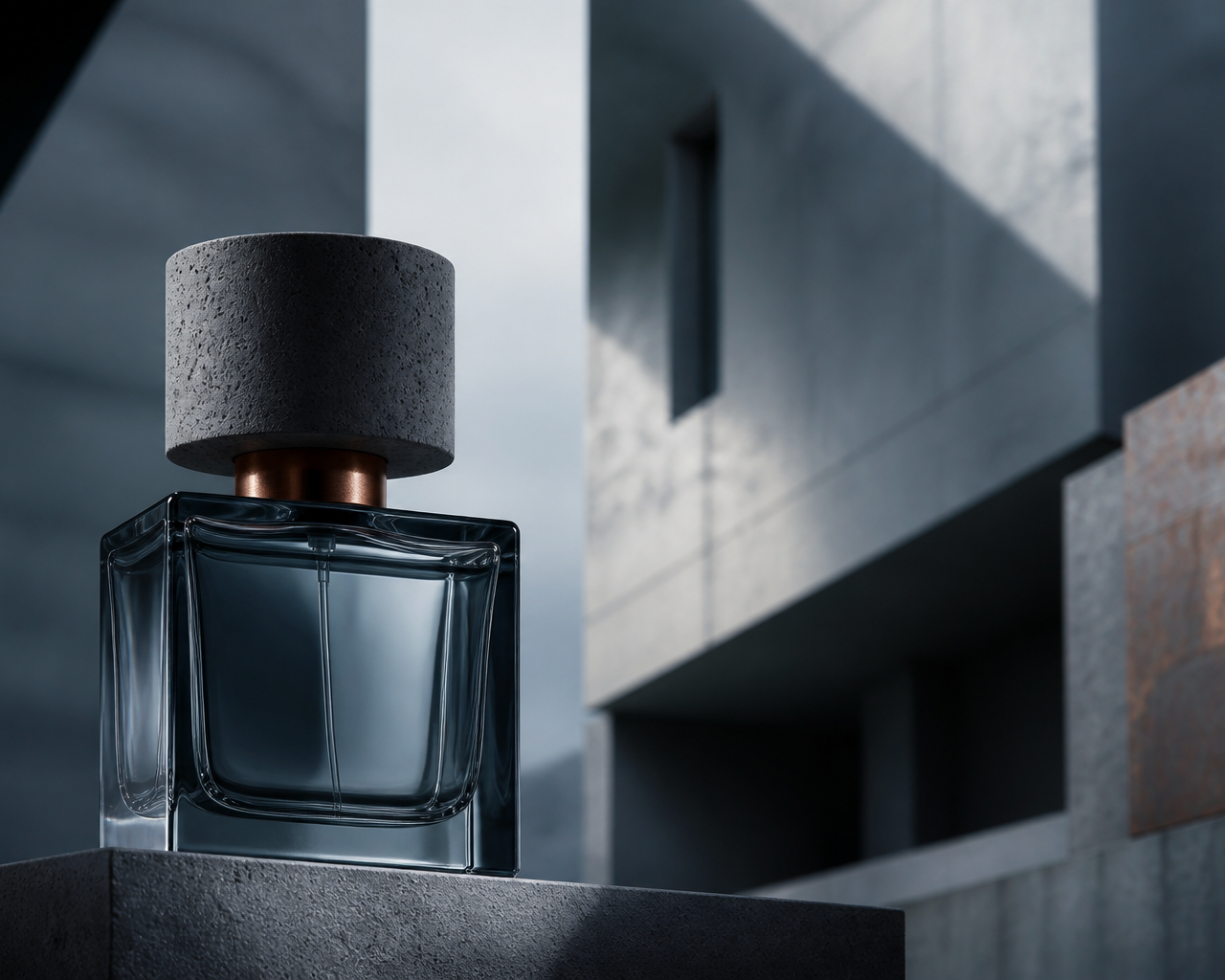
It isn't just the liquid inside that follows the brutalist ethos. The packaging is increasingly modular, utilizing recycled glass, heavy aluminum caps, and unbleached cardstock. Brands like Comme des Garçons (the pioneers of this movement with their 'Odeur 53') and newer houses like A24's film-inspired scents or Stora Skuggan emphasize the physical object as a piece of sculpture.
Case Studies in Olfactory Urbanism
Several key players are defining this 'Concrete Wave':
- Comme des Garçons - Concrete: A masterclass in subverting expectations. While it contains notes of sandalwood, they are crushed and synthesized to feel like hard-edged stone.
- Andrea Maack - Craft: Based on the Icelandic artist's visual work, it evokes cold metal and white marble.
- Filigree & Shadow - Tellus: A deep dive into the damp earth and the foundations of a building.
Sensory Mapping: Structure vs. Scent
| Architectural Feature | Correlating Olfactory Note | Emotional Response |
|---|---|---|
| Exposed Rebar | Iron oxides / Metallic notes | Alertness, Modernity |
| Damp Basement | Geosmin / Patchouli | Nostalgia, Melancholy |
| Electric Wiring | Vinyl / Hot dust accords | Energy, Tension |
| Polished Granite | Aldehydes / Flint | Sophistication, Distance |
Why We Seek 'Difficult' Scents
Psychologically, the move toward industrial scents represents a desire for hyper-presence. In a digital world where our most frequent interactions are frictionless and virtual, the smell of something 'hard'—like rust or wet pavement—acts as a sensory anchor. It reminds us that we possess bodies in a physical world.
"We are tired of smelling like fruit salads. We want to smell like the world we actually live in: a world of glass, steel, and collective effort."
The Geography of the Brutalist Nose
Where is this trend most prevalent? It flourishes in cities where the architecture itself is a dominant character. London, Berlin, Tokyo, and Chicago are the 'Big Four' of industrial scent consumption. These are cities with visible infrastructure and a proud history of modernist design. In these environments, the smell of the 'machine age' isn't a pollutant; it's a heritage.
- Berlin: High demand for 'asphalt' and 'smoke' profiles, mirroring the city's nightlife and history.
- Tokyo: A preference for 'clean' industrial scents—ink, paper, and static electricity.
- London: A blend of damp stone (The Barbican) and cold metal (The Tube).
How to Wear the Metropolis (FAQs)
Q: Isn't the smell of concrete repulsive?
A: On its own, raw industrial smells can be harsh. However, in perfumery, these are 'accords.' They are balanced with woods or resins to create something wearable yet evocative. It’s the difference between staring at a pile of gravel and looking at a beautiful concrete cathedral.
Q: When is the best time to wear an industrial fragrance?
A: These scents excel in transitional weather—autumn and spring. The dampness in the air heightens the mineral notes (the petrichor effect). They are also excellent 'power scents' for professional environments where you want to project a sense of structural reliability and modern edge.
Q: Are these scents gender-neutral?
A: Almost exclusively. Brutalism doesn't care about gender, and neither does the smell of a steel beam. They occupy a shared space of human experience, making them inherently unisex.
Final Thoughts: The New Romanticism
As we look to the future, the 'Culture' of scent is moving away from the garden gate and toward the city center. We are finding beauty in the gray, the oxidized, and the structured. The Brutalist Perfumer doesn't just make you smell good; they make you feel the weight and the wonder of the world we've built.
In the end, perhaps there is nothing more romantic than a scent that captures the fleeting moment of rain hitting the warm pavement of a city that never stops moving. It is the ritual of urban life, distilled into a single, sharp drop of liquid art.
“Brutalism doesn't care about gender, and neither does the sharp, mineral smell of a wet steel beam.”
Frequently asked questions
- What does a 'mineral' note actually smell like?
- Mineral notes evoke the smell of cold stone, wet pavement, or flint. They provide a 'dry' and 'texture-heavy' feeling to a fragrance, often achieved through synthetic ingredients like Ambroxan or Terrasol.
- Why is this trend popular now?
- As urbanization increases and our lives become more digital, people seek scents that feel 'grounded' and 'physical.' Industrial notes provide a sensory connection to the tangible reality of the modern city.
- Can industrial scents be worn daily?
- Yes. Many of these fragrances are designed to be skin-scents—subtle, clean, and unobtrusive—making them perfect for the office or casual urban wear.