The Brutalist Perfumer: Olfaction as Architecture
How a new wave of scent designers is using concrete, ozone, and static to redefine the boundaries of luxury fragrance.
The Smell of the Shadow
In a sterilized, high-ceilinged studio in East London, James Heeley points to a beaker that smells distinctly of wet pavement and burnt circuitry. It isn’t a mistake; it is a masterpiece. For decades, the luxury perfume industry sold us the dream of the garden—Grasse roses, Sicilian lemons, and the pastoral romance of the lavender field. But a new vanguard of 'brutalist' perfumers is rejecting the floral fantasy. They are turning instead to the sensory language of the city: the metallic tang of an elevator, the sterile hum of a data center, and the damp, flinty breath of a concrete stairwell.
This is not anti-perfume. It is a radical realignment of how we use scent to navigate the world. Just as Brutalist architecture sought to find honesty in raw materials and functional forms, these scents embrace synthetic molecules to narrate the reality of 21st-century life. This is the story of how scent became structural.
Why is Brutalist Fragrance Rising Now?
The movement towards 'harder' scents—often termed industrial or mineralic—mirrors a broader cultural shift. In an era of increasing digital abstraction, we crave elements that feel tactile, even if those elements are traditionally perceived as 'cold.' To wear a scent that mimics the smell of a hot lightbulb or a dusty library is to ground oneself in the physical world.
"Perfume used to be a veil to hide the world; now, it is a lens to focus on it. We are no longer looking for flowers; we are looking for the truth of the materials that surround us daily."
This shift is catalyzed by advancements in Isolates and Captive Molecules. Traditional natural extractions cannot capture the smell of a computer fan or a subway rail. The modern perfumer operates like an architect, using a palette of synthetics to build structures of scent that defy nature.
The Materials of the New Urbanism
To understand this genre, one must look at the specific olfactory building blocks. Traditional perfumery relies on the 'Olfactory Pyramid' (top, heart, and base notes). Brutalist perfumery often utilizes a 'Linear Structure,' where the scent remains consistent and uncompromising from the first spray until it fades hours later.
| Ingredient | Traditional Context | Brutalist Interpretation |
|---|---|---|
| Aldehydes | Used to add 'sparkle' to florals like No. 5. | Used to mimic industrial ozone and static electricity. |
| Petrichor | Associated with gardens after rain. | Interpreted as wet asphalt and damp basement concrete. |
| Castoreum | Used for warmth and leather notes. | Used to simulate the smell of industrial grease and machinery. |
| Ambroxan | A substitute for rare ambergris. | Leveraged for its mineral, flint-like, and 'flatscreen' texture. |
| Safraleine | A spicy, leathery molecule. | Used to recreate the scent of PVC and new car interiors. |
The Architecture of the Bottle
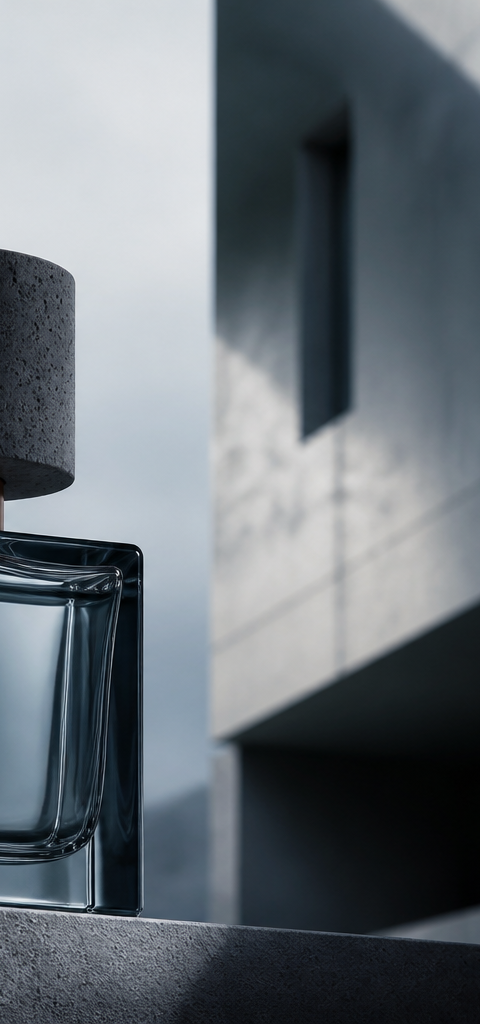
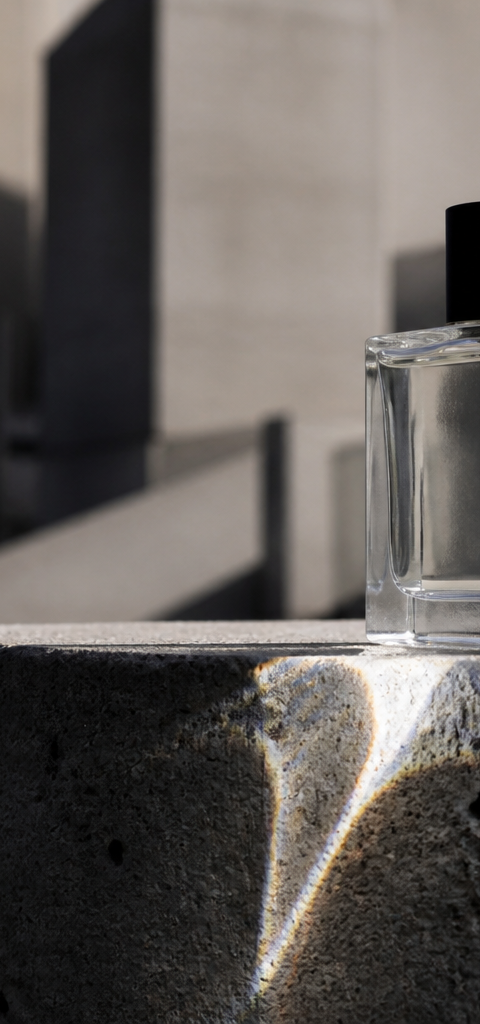
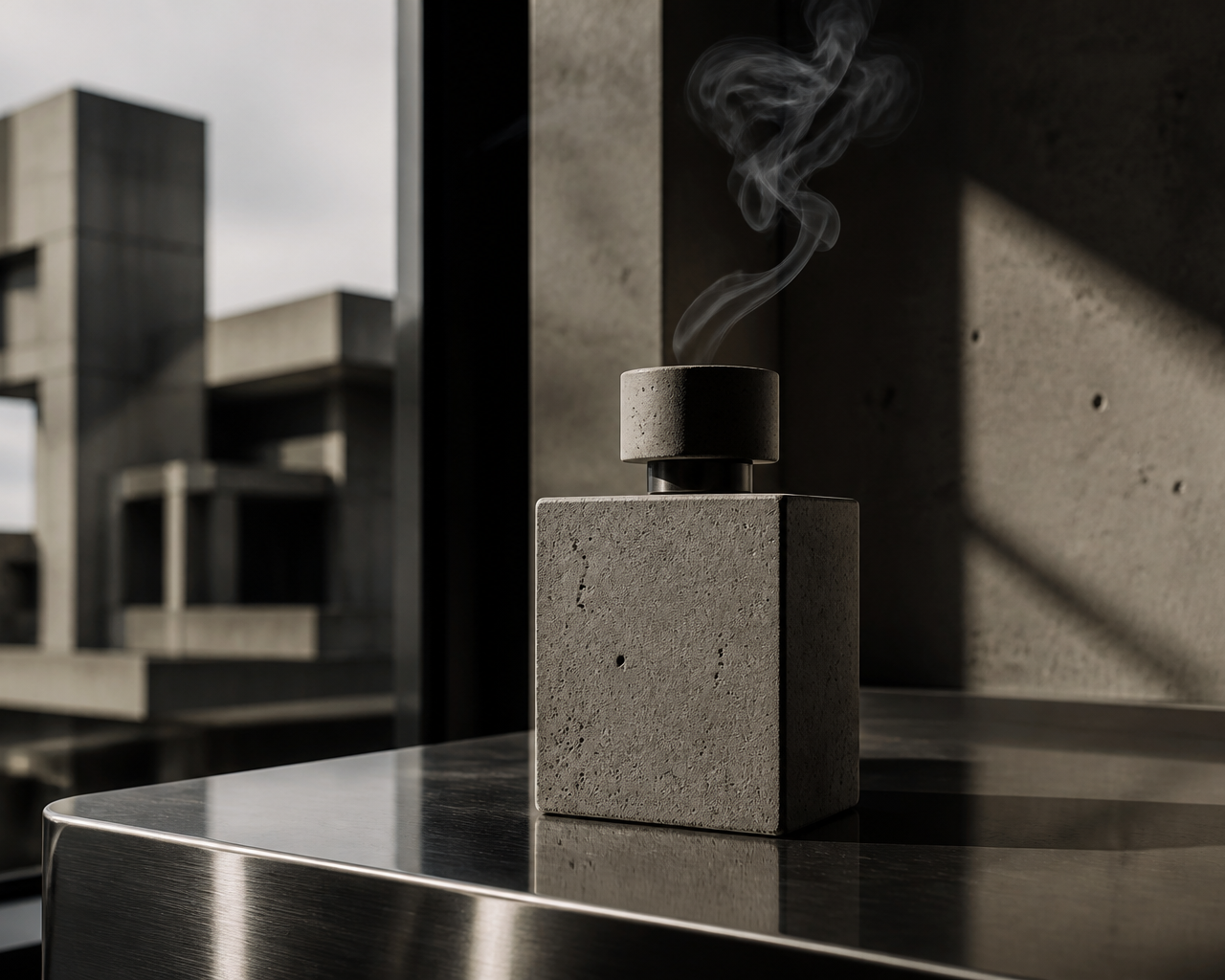
In this niche, the packaging is as deliberate as the juice inside. Brands like Comme des Garçons, A24 (with their genre-themed scents), and Xinu have moved away from rococo glass toward geometric, heavy materials.
- Monolithism: Large, heavy caps made of actual concrete or brushed aluminum.
- Typography-led Design: Ditching gold-leaf labels for Helvetica or industrial coding fonts.
- Translucency over Transparency: Using frosted glass to evoke the feeling of mist on a skyscraper window.
Comparing Olfactory Philosphies
To the uninitiated, the leap from a citrus cologne to a scent titled 'Concrete' or 'Metal Flower' can be jarring. The following table illustrates the shift in consumer intent and aesthetic profile.
| Feature | Romantic/Classical Perfumery | Brutalist/Modernist Perfumery |
|---|---|---|
| Primary Goal | Seduction and beauty | Evocation and spatial awareness |
| Key Inspiration | The Mediterranean, Colonial History | The Bauhaus, brutalist estates, deep-sea cables |
| Hero Ingredient | Rose, Jasmine, Sandalwood | Geosmin, Iso E Super, Vinyl Accord |
| Ideal Setting | Gala, Dinner Date, Morning Walk | Art Gallery, Industrial Workspace, Urban Commute |
| Texture | Velvety, Sirupy, Airy | Gritty, Cold, Sharp, Polymeric |
The Psychology of 'Uncanny' Scents
Why would anyone want to smell like an industrial park? The answer lies in olfactory realism. Studies in environmental psychology suggest that our brains are more stimulated by complexity and familiarity than by pure aesthetic 'beauty.'
When a scent captures the smell of an old book or a vinyl record, it triggers a different part of the limbic system than a generic floral bouquet. It is an intellectual pursuit. Brands like Buly 1803 or D.S. & Durga lean into this by creating 'vignette' scents—fragrances that tell a story of a specific moment in time, often one that involves human-made materials.
"There is a strange comfort in the smell of a dry cleaning shop or a freshly printed magazine. It is the scent of human progress, and wearing it is a form of self-identification with the modern age."
How to Wear the Concrete Jungle
For the curious reader, diving into brutalist scents requires a shift in application technique. Because these scents are often linear and heavy on synthetics, they last significantly longer on fabrics than on the skin.
- Layer with Neutrality: These scents act as architectural frames. Wearing a 'concrete' scent alongside a basic white t-shirt enhances the garment's texture.
- Temperature Matters: Industrial scents often 'bloom' in the cold. The crispness of a winter morning brings out the metallic notes that might feel stifling in a humid summer.
- Contextualize: These are not 'office safe' perfumes in the traditional sense, but they are 'intellectual safe.' They signal a wearer who values design over decoration.
FAQ
Are synthetic scents safe for the skin?
Yes. In fact, most 'brutalist' synthetics are highly regulated by IFRA (International Fragrance Association) and are often more hypo-allergenic than natural essential oils, which contain hundreds of unpredictable chemical constituents.
Do these perfumes actually contain concrete?
Generally, no. Perfumers use accords—combinations of ingredients like Geosmin and Patchouli—to recreate the smell of concrete. However, some brands use concrete in the bottle or cap design to emphasize the aesthetic connection.
What is the best 'entry-level' industrial scent?
'Concrete' by Comme des Garçons is a seminal work in this field. Despite its name, it is remarkably wearable, blending sandalwood with a synthetic 'shattered' glass accord that feels avant-garde yet sophisticated.
Conclusion: The Future is Mineral
As we continue to urbanize, our definition of 'natural' will continue to evolve. We are the first generation to feel nostalgia for the hum of a hard drive and the scent of a subway station. By capturing these fleeting, industrial moments in a bottle, brutalist perfumers are not just making us smell different—at heart, they are teaching us to love the structures we inhabit. They are finding the soul in the silicon, and the beauty in the brutal.
“Perfume used to be a veil to hide the world; now, it is a lens to focus on it.”
Frequently asked questions
- What defines a 'brutalist' perfume?
- A brutalist perfume is characterized by its focus on raw, industrial materials (concrete, metal, stone), its use of synthetic molecules, and a linear structure that values honesty and form over traditional floral beauty.
- Are these scents wearable for everyday use?
- While avant-garde, many are designed for daily wear, functioning as a 'skin scent' or an architectural accessory that complements modern, minimalist fashion.
- Why is syntax/naming so important in this genre?
- Names like 'Concrete,' 'Garage,' or 'Cyber' are used to prime the brain for the olfactory experience, framing the scent as a piece of art or an environmental study rather than a beauty product.