The Arbitrage of Quiet: Why Luxury Real Estate is Chasing Silence
In an age of hyper-connectivity, the ultimate financial premium is now being paid for acoustic isolation and the absence of data.
The Death of the Open Plan and the Birth of the Quiet Premium
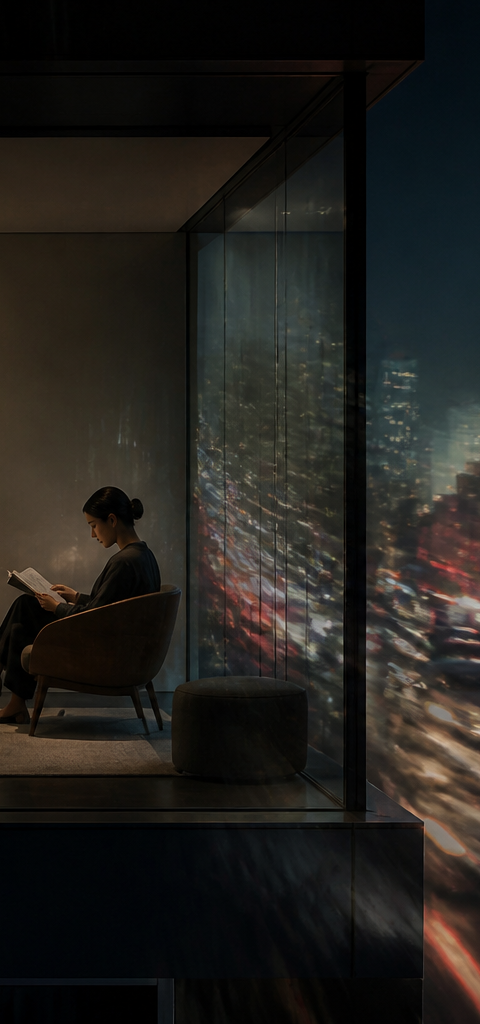
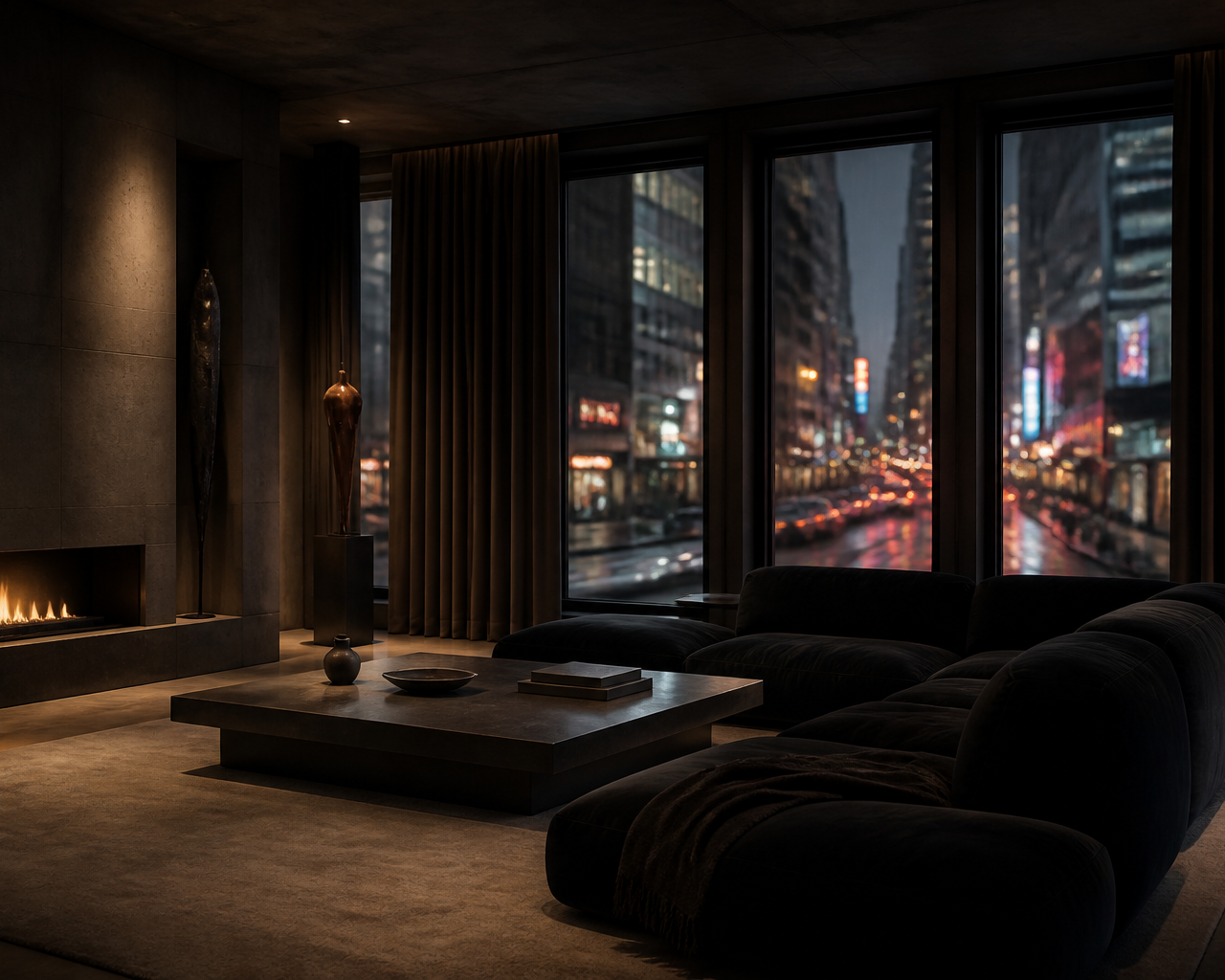
For decades, the architectural zeitgeist was defined by the 'great room'—vast, echoing expanses of glass, steel, and hardwood that signaled transparency and communal flow. But walk through a $20 million penthouse in Tribeca or a brutalist villa in Mayfair today, and you will notice a distinct atmospheric shift. The air feels heavier, the ambient hum of the city is surgically removed, and the floorboards don't just refrain from creaking; they seem to swallow the very sound of your footsteps.
We have entered the era of Acoustic Equity. As our cities grow denser and our digital lives noisier, silence has transitioned from a basic human expectation to a high-margin financial asset. The market is no longer just selling square footage; it is selling the decibel drop. This is the 'Arbitrage of Quiet'—a phenomenon where investors and homeowners are paying a verified premium for the absence of sound.
Why is silence suddenly so expensive?
The economics are simple: supply is crashing while demand is reaching a fever pitch. In 1950, roughly 30% of the world's population lived in urban areas; by 2050, that figure is projected to be 68%. In this densification, the 'noise floor' of the average city has risen by roughly 6 to 10 decibels over the last several decades. Because decibels are measured on a logarithmic scale, a 10dB increase represents a perceived doubling of loudness.
For the ultra-high-net-worth individual (UHNWI), the home has ceased to be a place of entertainment and has become a sensory sanctuary. The shift toward deep-work economies and the mental health 'wellness' boom have codified silence as a prerequisite for productivity and longevity.
"Silence is no longer an aesthetic choice; it is a structural requirement for the preservation of cognitive capital. We are seeing clients spend 15% of their total construction budget purely on acoustic decoupling."
The Engineering of Invisible Assets
How do you price an absence? In the modern market, developers utilize 'acoustic consultants' to grade properties long before the first resident moves in. These consultants measure the Sound Transmission Class (STC) of walls and the Impact Insulation Class (IIC) of floors.
Comparing Traditional vs. Quiet-First Construction
| Feature | Standard Luxury Development | Acoustic-First Development |
|---|---|---|
| Window Glazing | Double-pane (Standard) | Triple-pane Laminated (Acoustic Glass) |
| Wall Structure | Single Stud with Batt Insulation | Staggered Stud or Double Wall with Green Glue |
| Floor Underlayment | Thin Foam or Cork | Recycled Rubber High-Density Mats (10mm+) |
| HVAC Systems | Standard Variable Speed | Sound-Attenuated Plenums with Soft-Ducting |
| Sealing | Standard Weather Stripping | Intumescent Acoustic Perimeter Seals |
| Premium Added | Base Market Rate | 12% - 22% Price Appreciation |
The Geography of Sound: Where Silence Commands the Highest Price
The premium for quiet is not distributed evenly across the globe. It is most aggressive in '24-hour cities' where the external environment never sleeps. In Tokyo, London, and New York, the price delta between a street-facing unit and a courtyard-facing unit—or one equipped with high-performance acoustic mitigation—can exceed the cost of an extra bedroom.
Can silence be quantified in ROI?
Recent data suggests that properties advertised with specific 'quiet-certified' features sell up to 15% faster than their noisier counterparts. Buyers are increasingly wary of the 'hidden tax' of noise pollution: sleep deprivation, elevated cortisol levels, and the long-term impact on cardiovascular health. In this context, soundproofing is not an expense; it is a hedging strategy against the declining quality of urban life.
Comparative ROI of High-End Finishings
| Investment Type | Typical Cost (USD) | Estimated Resale Value Lift |
|---|---|---|
| Italian Marble Kitchen | $150,000 | 80% - 90% |
| Whole-Home Soundproofing | $100,000 | 120% - 140% |
| Smart Home Integration | $50,000 | 60% - 70% |
| Acoustic Triple Glazing | $80,000 | 110% - 115% |
The Rise of 'Dark' Real Estate
Beyond just sound, there is a burgeoning market for 'data-quiet' homes. As the world becomes saturated with 5G towers and IoT connectivity, a niche segment of the financier class is seeking Faraday Cage construction—homes built with architectural shielding that blocks electromagnetic frequencies (EMF).
This isn't just about tinfoil-hat paranoia; it’s about 'digital detox' as a luxury. Developers like Nightingale in Australia and certain boutique firms in Switzerland are experimenting with conductive paints and specialized copper meshes embedded in the drywall. These homes offer the ultimate luxury in a surveillance-capitalism world: the inability to be reached.
"In the 20th century, we built towers to see. In the 21st century, we build them to hide. We are trading the view for the void."
Frequently Asked Questions (FAQ) for the Interested Investor
Is acoustic retrofitting worth it for older properties?
Retrofitting is significantly more expensive than building from scratch, often costing 2-3x more per square foot. However, in historic districts where new construction is banned, a 'silent retrofit' can make a property the most desirable unit in a noisy, prestigious neighborhood.
What are the most effective materials for modern soundproofing?
Look for Mass Loaded Vinyl (MLV), which adds density without bulk, and decoupling joints that prevent sound vibrations from traveling through the structural frame of the building.
Does silence actually increase property appraisal?
While appraisers often focus on comps and square footage, the 'market appeal' factor of a quiet home often results in bidding wars that push the final sale price significantly above the appraised value.
Conclusion: The Quiet Revolution
As interest rates stabilize and the luxury market becomes more discerning, the flashy amenities of the past—the gold-plated faucets, the private screening rooms—are losing ground to the intangible. The discerning investor is looking for something that cannot be photographed for Instagram: the peace to think, the space to breathe, and the luxury of total, uninterrupted silence. In the hierarchy of wealth, the ability to control your environment is the final frontier. Silence is no longer golden; it is a blue-chip asset.
“In the hierarchy of modern wealth, the ultimate luxury is the ability to turn the world off.”
Frequently asked questions
- How much does professional soundproofing add to luxury property value?
- On average, properties with certified acoustic mitigation command a 15-20% premium in noisy metropolitan hubs like New York or London.
- What is the difference between sound absorption and soundproofing?
- Sound absorption (using foam or fabric) improves the sound inside a room, while soundproofing (using mass and decoupling) prevents sound from entering or leaving a space entirely.
- Is 'digital silence' involving EMF shielding a growing trend?
- Yes, high-end developers are increasingly using Faraday Cage technology to create 'data-dead' zones as a luxury wellness feature.