The Arbitrage of Absinthe: Distilling the New Alternative Asset Class
Beyond the green fairy lies a liquid market where vintage spirits are outperforming traditional equities and fine wine.
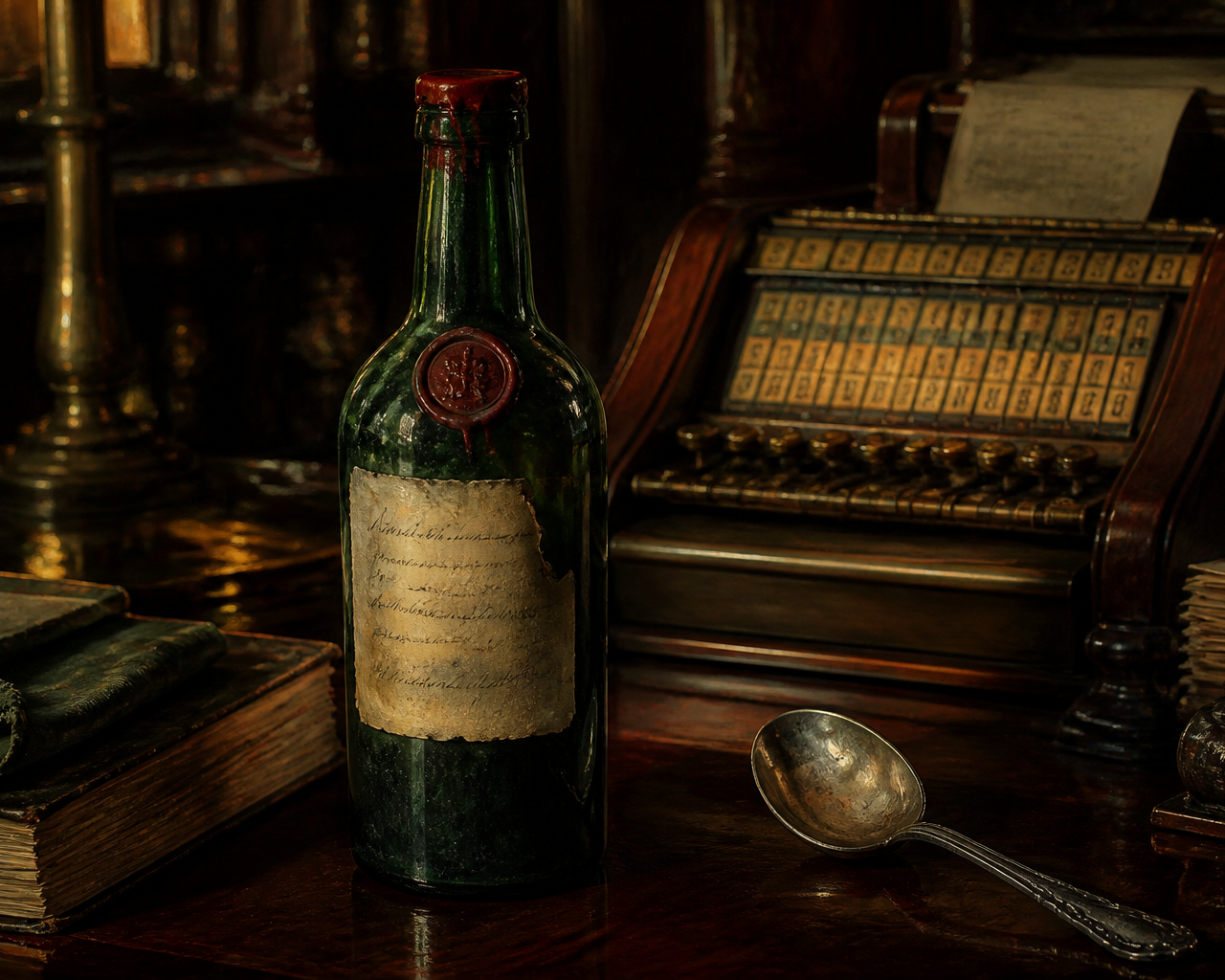
The Green Fairy’s Financial Renaissance
In a dimly lit auction house in South Kensington, the air doesn’t smell of oak or ledger paper; it smells of anise, wormwood, and the distinct, dusty scent of 1910. As the gavel falls on a bottle of Pernod Fils—pre-ban, original seal—the price settles at a staggering £12,000. This is not a purchase for a hedonistic weekend; it is a calculated entry into the world of liquid gold.
While the financial world has spent the last decade obsessing over Bitcoin and NFTs, a quieter, more tactile revolution has been brewing in the cellars of Europe. Rare spirits, specifically pre-ban absinthe and mid-century Chartreuse, are no longer just the domain of eccentric mixologists. They have become a sophisticated alternative asset class, offering a combination of scarcity, historical pedigree, and a lack of correlation with traditional equity markets.
Why Investors Are Turning to 'Dead' Distilleries
The fundamental allure of vintage spirits lies in the concept of a 'closed loop.' Unlike a modern whiskey or gin, which can be perpetually produced, pre-ban absinthe (produced before the 1914-1915 prohibitions) is a finite resource. Every bottle opened is a bottle removed from the global supply forever. This supply-side deflation creates a natural floor for prices, provided demand remains constant or grows.
"We are seeing a shift from 'drinking' value to 'holding' value. An 1890s bottle of Edouard Pernod is more than a spirit; it is a time-capsule equity that cannot be replicated by modern techniques."
The Economics of Scarcity: Absinthe vs. Fine Wine
Historically, fine wine has been the benchmark for liquid investments. However, the wine market is fraught with risks: storage sensitivity, "cork taint," and a relatively short peak drinking window. In contrast, spirits with high alcohol-by-volume (ABV) contents are remarkably resilient. A well-sealed bottle of 70% ABV absinthe is virtually immortal, making it a safer long-to-medium-term play for collectors who lack professional-grade humidity-controlled cellars.
Comparing Liquid Asset Profiles
| Feature | Fine Wine (Bordeaux/Burgundy) | Pre-Ban Absinthe | Rare Single Malt Scotch |
|---|---|---|---|
| Durability | High (but sensitive to temp) | Extremely High (Stable) | Very High |
| Annual Growth | 8-12% Average | 15-22% (Niche) | 12-18% |
| Market Maturity | Saturated/High | Emerging/Low | Mature/High |
| Scarcity Type | Seasonal/Vintage | Extinct (Pre-Ban) | Limited Release |
How the Market Values the 'Green Fairy'
Pricing rare spirits isn't as simple as checking a ticker. It requires a forensic understanding of provenance. An unattributed bottle found in a French basement might fetch $1,500, but the same bottle with a documented chain of custody from a known estate can command five times that amount.
The 'Veblen Good' Effect
Investors must distinguish between three primary tiers of the market:
- The Blue Chips: Brands like Pernod Fils and Berger. These are the "Apple and Microsoft" of the absinthe world.
- The Artisanal Rares: Smaller distillers from the Pontarlier region that ceased operations during WWI.
- The Tarragona Exception: Yellow and Green Chartreuse produced in Spain after the monks were expelled from France. These have seen a 400% price surge in the last seven years.
Is Liquid Gold a Hedge Against Inflation?
As central banks navigate the complexities of interest rate cycles, tangible assets often serve as a hedge. The Knight Frank Luxury Investment Index has consistently shown that rare spirits outperform many traditional asset classes during periods of high inflation. This is because the consumer of these goods—the ultra-high-net-worth individual—remains relatively insulated from the cost-of-living spikes that affect broader markets.
"In a volatile market, you want assets that people desire regardless of the S&P 500's performance. You can't drink a stock certificate if the world ends, but you can certainly toast to your survival with a 120-year-old spirit."
The Risks: Counterfeits and Regulation
No market is without its pitfalls. The rise in value has predictably led to a rise in sophisticated counterfeiting. Lab testing for radioactive carbon dating (to prove the liquid predates the nuclear testing of the 1940s) is becoming a standard due-diligence step for high-value transactions. Furthermore, the legalities of shipping high-proof alcohol across borders can create logistical friction that eats into margins.
Step-by-Step: How to Enter the Vintage Spirit Market
If you are considering diversifying your portfolio into liquid assets, follow this strategic framework:
- Focus on Condition: Labels can be dirty, but the 'fill level' (ullage) is critical. High evaporation suggests a compromised seal.
- Leverage Specialist Auctions: Avoid generalist antique sites. Stick to houses like Sotheby’s or specialist platforms like Fine Spirits Auction.
- Verify the Tax Status: Ensure duties are paid in your jurisdiction to avoid seizure during transport.
- Understand the 'Angel's Share': Even in a sealed bottle, a fraction of a percent of volume is lost over decades. Factor this into your valuation.
FAQ: Investing in Rare Spirits
Is it legal to buy and sell pre-ban absinthe?
Yes, in most jurisdictions, including the US and UK, owning and trading antique spirits produced before modern regulations is legal, provided the transaction complies with state or national liquor laws and tax requirements.
How do I recognize a fake bottle?
Look for inconsistencies in the glass (modern glass is too perfect), the printing technique of the label (lithography vs. digital), and the cork's condition. Professional authentication often includes ultraviolet light testing of the paper and glue.
What is the minimum entry price for a serious investment?
While you can find minor bottles for $500, a serious investment-grade bottle with high appreciation potential typically starts at the $3,000–$5,000 mark.
Conclusion: The Future of High-Proof Portfolios
As we move toward a more digitized economy, the value of the physical and the rare only increases. The arbitrage of absinthe isn't just about the alcohol; it's about the capture of history and the mathematical certainty of diminishing supply. For the investor with a patient palate and a keen eye for provenance, the 'Green Fairy' is no longer a hallucination—it’s a very real, and very profitable, reality.
“You can't drink a stock certificate, but you can certainly toast to your survival with a 120-year-old spirit.”
Frequently asked questions
- What makes pre-ban absinthe different from modern versions?
- Pre-ban absinthe was made before the 1915 prohibition using specific copper-pot distillation methods and high-quality base grapes that were largely destroyed during the Phylloxera plague, resulting in a flavor profile and texture impossible to replicate today.
- How does inflation affect the rare spirit market?
- Rare spirits act as Veblen goods; their demand often increases or stays flat regardless of inflation, providing a tangible hedge against currency devaluation.
- Which auctions are best for spirit investors?
- Sotheby's, Christie's, and specialist houses like Whisky Auctioneer or Fine Spirits Auction are the industry standards for verified rare spirits.