The Ink of the Archive: Why the 'Lost' Novel Is Literature’s New Ghost
From Nabokov’s index cards to McCarthy’s hidden drafts, the modern obsession with unfinished fragments is reshaping how we value genius.
The Specter in the Cardboard Box
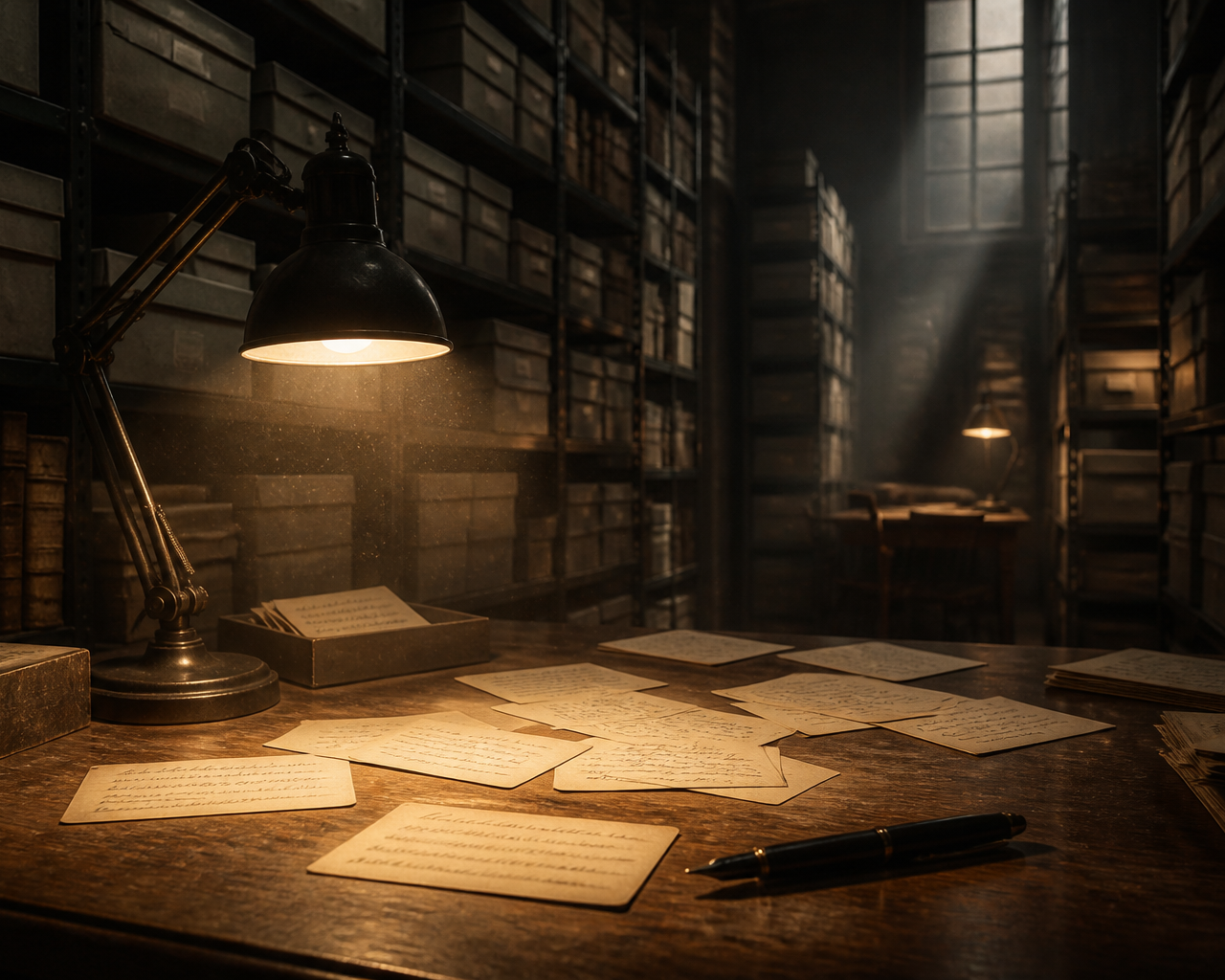
In the temperature-controlled silence of the Beinecke Rare Book & Manuscript Library, the air feels thin, as if the oxygen itself has been filtered to protect the dead. Here, amidst the vellum and the acid-free folders, lies the 'ghost' of an author: the cross-outs, the false starts, and the abandoned visions. For decades, the gold standard of literature was the finished product—the bound volume, the definitive edition. But in the last decade, a seismic shift has occurred in the geography of the literary world. We have become obsessed with the 'Lost Novel.'
Take, for instance, the recent frenzy surrounding Gabriel García Márquez’s Until August. Written as his memory was failing, the Nobel laureate originally told his sons to destroy the manuscript. They didn't. Instead, they published it in 2024, sparking a global debate about the ethics of the archive versus the wishes of the creator. This isn't just a trend; it's a new way of reading. We are no longer content with the curated mask of the author; we want the sweaty, uncertain face behind the draft.
Why Are We Obsessed with Fragments?
What drives this hunger for the incomplete? Part of it is the cult of personality. In an era of social media oversharing, the mystery of the 'unseen' is the ultimate cultural currency. If you have read all of Hemingway, the only way to experience that 'first-time' rush again is to find something he never intended for your eyes.
The Economy of the Posthumous
There is also a cynical, or perhaps merely practical, economic angle. The publishing industry, facing stagnant growth in mid-list fiction, relies on the 'brand' of a deceased titan to move units. A 'new' Kafka story is a marketing miracle. Yet, for scholars, these fragments offer something more profound: a map of a genius’s failure. As the late Harold Bloom once noted, understanding where a writer faltered is often more instructive than seeing where they succeeded.
"The unfinished work is a window into the workshop of the mind, where the scaffolding hasn't yet been removed from the cathedral."
The Great Unfinished: A Statistical Comparison
When we look at the history of posthumous releases, we see two distinct categories: the 'Completed by Proxy' (finished by another writer) and the 'Raw Fragment' (presented as-is).
Tracking the Surge of Posthumous 'Hidden' Works
| Author | Title | Status at Death | Release Date | Significance |
|---|---|---|---|---|
| Vladimir Nabokov | The Original of Laura | Scrawled on index cards | 2009 | He requested it be burned; his son refused. |
| David Foster Wallace | The Pale King | 1,000+ pages of notes | 2011 | Reconstructed by editor Michael Pietsch. |
| Roberto Bolaño | The Spirit of Science Fiction | Completed manuscript | 2016 (Eng) | Found in his personal archives post-2003. |
| Harper Lee | Go Set a Watchman | Early draft of Mockingbird | 2015 | Sparked massive controversy over authorial intent. |
| *Field journal - Archbold 1936 New Guinea Exp. February 27, 1936 to July 8, 1937 (IA fieldjournal00tate) — Wikimedia Commons · Tate, G. H. H. (George Henry Hamilton), 1894-1953 | ||||
| American Museum of Natural History | ||||
| American Museum of Natural History. Department of Mammalogy. Archbold Expeditions Collection | ||||
| Archbold Expedition to New Guinea (2nd: 1936-1937) · Public domain* |
What Defines a 'Lost' Work?
How do these manuscripts actually surface? It is rarely a cinematic discovery in a dusty attic. Most often, it is the result of Textual Archaeology. University libraries like the Harry Ransom Center at UT Austin or the Bodleian in Oxford employ specialists who spend years cataloging 'unprocessed' papers.
The Three Stages of Discovery
- The Hidden Hoard: Papers held by families who are reluctant to sell due to privacy concerns.
- The Archival Lag: Manuscripts that were technically 'found' years ago but take decades to transcribe from idiosyncratic handwriting (think Thomas Mann or Virginia Woolf).
- The Digital Ghost: The newest frontier—recovering deleted files from old hard drives or floppy disks, a task requiring 'digital forensics' experts.
Is Technology Changing the Shape of the Archive?
In the past, a flame could erase a legacy. Today, the cloud is forever. Even 'deleted' drafts leave a trail. This has led to the rise of AI-assisted reconstructions. While controversial, some estates are exploring whether Large Language Models (LLMs) trained on an author's specific style can 'fill in the blanks' of a fragmented chapter.
Comparing Preservation Methods
| Method | Longevity | Accessibility | Risk Level |
|---|---|---|---|
| Vellum/Acid-free Paper | 500+ Years | Low (Requires physical presence) | Fire, humidity, theft |
| Microfilm/Microfiche | 100+ Years | Medium | Physical degradation |
| Digital Cloud Storage | Indefinite? | High (Global access) | Format obsolescence, hacking |
| Private Estate Boxes | Unknown | Zero | Accidental disposal, rot |
The Ethical Boundary: To Publish or to Burn?
We must ask the uncomfortable question: are we violating the dead? Franz Kafka famously instructed Max Brod to burn his manuscripts. Had Brod complied, we would have no The Trial or The Castle. The history of 20th-century literature would be fundamentally altered. This creates the 'Brod Paradox': the person who betrays the artist’s final wish is often the person who saves their legacy.
"The archive is not a graveyard; it is an incubator where ideas wait for the right cultural temperature to hatch."
Why Readers Crave the Unedited
- Vulnerability: Seeing a genius struggle with a sentence makes them human.
- Intertextuality: These drafts often bridge the gap between two famous published works.
- The 'Detective' Joy: For the niche reader, piecing together a plot from fragments is a ludic, game-like experience.
Conclusion: The Infinite Library
As we move further into the 21st century, the 'finished book' may become just one part of a multi-layered literary experience. We are entering an era of the Infinite Bibliography, where an author's life-work consists not just of the twelve books on the shelf, but the terabytes of metadata behind them. For the curious reader, this is a golden age. The giants of literature are no longer static statues; they are living, breathing, and still—miraculously—writing from beyond the grave.
Frequently Asked Questions (FAQ)
What is a 'posthumous' novel?
A posthumous novel is a book published after the author has died. This can include completed works the author never released, or unfinished fragments edited together by someone else.
Why did Gabriel García Márquez want his last book destroyed?
He suffered from dementia and felt the book, Until August, lacked the structural integrity and perfection of his earlier masterpieces. He believed it was 'meaningless' and should not be read.
Are unfinished books considered 'canon'?
This is a point of debate among scholars. Most 'completist' readers include them in the author’s body of work, but literary critics often treat them as 'supplementary' or 'marginalia' rather than primary texts.
How do libraries acquire these manuscripts?
Usually through a mix of high-profile auctions and tax-deductible donations from the author’s estate. These acquisitions can sometimes cost millions of dollars, as seen with the archives of Bob Dylan or Gabriel García Márquez.
“The archive is not a graveyard; it is an incubator where ideas wait for the right cultural temperature.”
Frequently asked questions
- What is the Brod Paradox in literature?
- It refers to Max Brod's decision to publish Franz Kafka's work despite Kafka's explicit instructions to burn it, suggesting that 'betraying' an author can sometimes save their legacy.
- How does AI affect the publication of lost novels?
- AI is increasingly used to analyze an author's prose style to help editors reconstruct missing sentences or decide where a fragment most likely fits in a narrative timeline.
- Which libraries have the largest literary archives?
- Significant archives include the Harry Ransom Center (Texas), the Beinecke (Yale), the British Library (London), and the Bodleian (Oxford).