The Ink of Exile: How Displacement Perfected the Modern Novel
Probing the profound literary friction that occurs when language and home are forcibly separated.
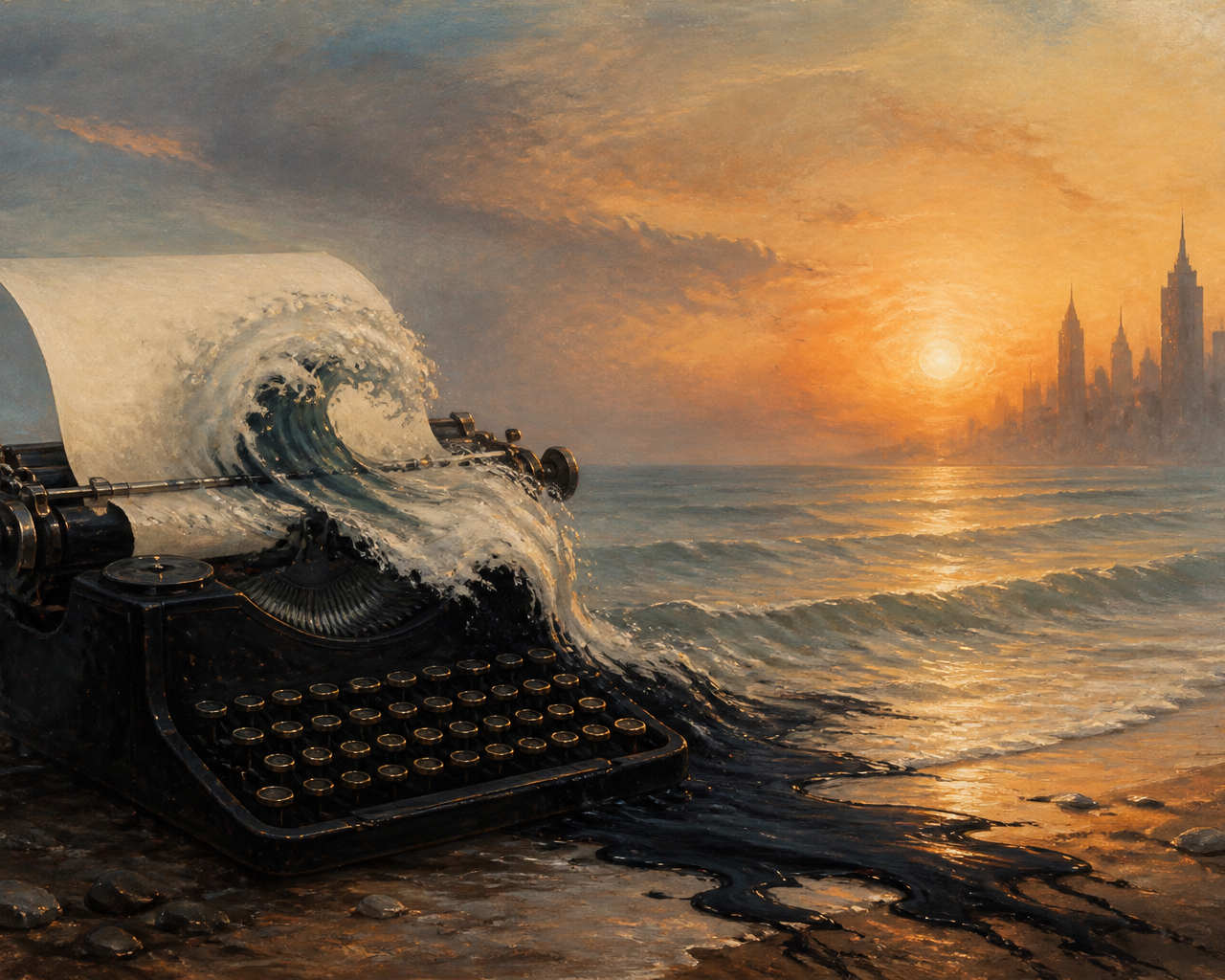
The Geography of the Displaced Mind
There is a specific kind of internal silence that descends when a writer realizes they can never go back. Not just to a house, or a city, but to the very linguistic ecosystem that birthed their first thoughts. Vladimir Nabokov called this the 'tragedy of the private language,' a transition from the lush, multidimensional timber of Russian to what he initially perceived as the 'stiff' instruments of English. Yet, in that friction between the lost mother tongue and the adopted stepmother tongue, a new kind of literature was born: the Exilic Novel.
We often treat displacement as a political tragedy—which it is—but in the realm of high literature, it acts as a high-pressure centrifuge. It strips away the comforts of idiomatic autopilot, forcing the writer to reconstruct reality from scratch. This isn't merely writing about being a refugee; it is the process of using the English language to map a territory that no longer exists on any physical globe.
The Linguistic Tax of the Border
When a writer moves across a border, they pay a 'linguistic tax.' Every sentence must be scrutinized for authenticity. Does the English word 'home' carry the same weight as the Arabic bayt or the German Heimat? For writers like Jhumpa Lahiri or Viet Thanh Nguyen, the English language is not just a medium; it is a laboratory where the cultural DNA of two worlds is spliced together.
"Exile is strangely compelling to think about but terrible to experience. It is the unhealable rift forced between a human being and a native place." — Edward Said, Reflections on Exile
This rift creates a stylistic hallmark: Hyper-lucidity. Because the writer cannot take their surroundings for granted, their descriptions are often more vivid, more sensory, and more precise than those of 'native' writers who have never left their zip code.
Why Does Displacement Drive Structural Innovation?
It is no coincidence that the most influential novels of the last century—Ulysses, Lolita, The Satanic Verses—were written by men and women living outside their places of birth. Displacement breaks the linear narrative. If your life is fractured, your story cannot move in a straight line.
We see this in the surge of Non-Linear Temporality. When you live in London but dream in Farsi, time becomes a palimpsest. You are in 2024, but a smell on the Underground transports you to 1988 Tehran. The exilic novel masters this 'braided time,' jumping between continents and decades within a single paragraph.
Comparing Narrative Modes: The Settled vs. The Displaced
| Feature | The Settled Narrative | The Exilic Narrative |
|---|---|---|
| Spatio-Temporal Logic | Linear, chronological, localized. | Fragmented, recursive, global. |
| Linguistic Texture | Seamless, idiomatic, transparent. | Self-conscious, pun-heavy, code-switching. |
| Core Conflict | Individual vs. Society. | Self vs. Lost History. |
| Narrative Voice | Authoritative 'I'. | The unreliable, shifting 'I'. |
The Rise of the 'Translingual' Masterpiece
In the late 20th century, a new phenomenon emerged: the Translingual Writer. These are authors who write in a language not their own, not out of necessity, but as a deliberate aesthetic choice. Consider Joseph Conrad, a Pole who became the master of maritime English. His prose has a rhythmic, slightly uncanny quality that a native speaker could never consciously replicate.
Today, this tradition continues with writers like Yiyun Li and Aleksandar Hemon. They treat English as an object to be disassembled and reassembled. They ignore the 'rules' of flow, opting instead for a jagged, startling syntax that reflects the trauma of their origins.
The Psychology of Binocular Vision
Displaced writers possess what W.E.B. Du Bois famously called 'Double Consciousness,' but applied to geography. They see every object through two lenses simultaneously. A simple apple is just fruit to a local, but to the exile, it is a reminder of the smaller, sourer apples of the Pomeranian orchards they fled.
Common Tropes in Exilic Literature:
- The Ghostly Double: A character who stayed behind and lived the life the narrator 'should' have had.
- The Untranslatable Object: A specific item (a key, a rug, a recipe) that defies English description.
- The Bureaucratic Labyrinth: The dehumanizing process of visas and passports as a metaphor for existential limbo.
How Do Contemporary Writers Handle the 'Refugee' Label?
There is a growing tension in the literary world regarding the 'Refugee Novel.' Writers like Dina Nayeri argue that the West expects a specific kind of 'gratitude narrative' from displaced authors. However, the new wave of literature is rejecting this. They are writing stories that are messy, ungrateful, and deeply intellectual, refusing to be pigeonholed as mere 'trauma memoirs.'
"The refugee is the contemporary par excellence; by breaking the continuity between man and citizen, he puts the fictions of the nation-state into crisis." — Giorgio Agamben
The Impact of Forced Migration on Genre Distribution
| Genre | Usage in Exilic Writing | Function |
|---|---|---|
| Magical Realism | High | Using the supernatural to bridge the gap between two disparate realities. |
| Epistolary | Moderate | Letters to a home that can no longer receive them. |
| Metafiction | Very High | Questioning the validity of memory and the act of storytelling itself. |
The Future of the Global Novel
As the climate crisis and geopolitical instability increase the number of displaced persons, the 'Exilic Novel' will likely cease to be a sub-genre and become the dominant form of the 21st century. The 'Global Novel' is, by definition, a novel of movement. It is a literature that exists in the transit lounge, written by people who belong everywhere and nowhere.
In the end, the ink of exile is the only ink that doesn't fade. By losing their home, these writers have gained the world, and in doing so, they have taught the English language how to speak for the dispossessed. They remind us that the greatest stories are not found in the hearth, but in the long, cold walk away from it.
FAQ: Understanding Exilic Literature
What is translingualism in literature?
Translingualism refers to the phenomenon of authors writing in a language that is not their native tongue. This often results in unique syntactic structures and a fresh perspective on the adopted language's idioms.
How does displacement affect a writer's style?
It often leads to a more sensory, detailed prose style because the writer cannot rely on shared cultural assumptions. It also frequently leads to non-linear narrative structures that mirror the fragmented experience of memory and trauma.
Who are the most famous exilic writers?
Key figures include Vladimir Nabokov (Russian/English), Joseph Conrad (Polish/English), Milan Kundera (Czech/French), and more recently, Chimamanda Ngozi Adichie and Viet Thanh Nguyen.
“The exilic novel is the process of using the English language to map a territory that no longer exists.”
Frequently asked questions
- What is the difference between diasporic and exilic literature?
- While overlapping, exilic literature focuses specifically on the immediate trauma and 'rift' of being forced from a homeland, whereas diasporic literature often covers multi-generational experiences of living away from an ancestral soil.
- Why is Nabokov considered the pinnacle of exilic writing?
- Nabokov successfully transitioned from being a major Russian stylist to a major English stylist, but he maintained a 'foreigner's precision' that allowed him to see English puns and patterns that native speakers missed.
- Can a writer be 'in exile' within their own country?
- Yes, 'internal exile' occurs when writers are silenced or alienated by their own government, leading to similar narrative strategies of subversion and coded language.