The Silence of the Deep: Why Underwater Soundscapes are the New Frontier of Conservation
As human 'acoustic fog' disrupts the ocean's intricate communication networks, a new generation of bioacousticians is fighting to restore the planet's primary sensory domain.
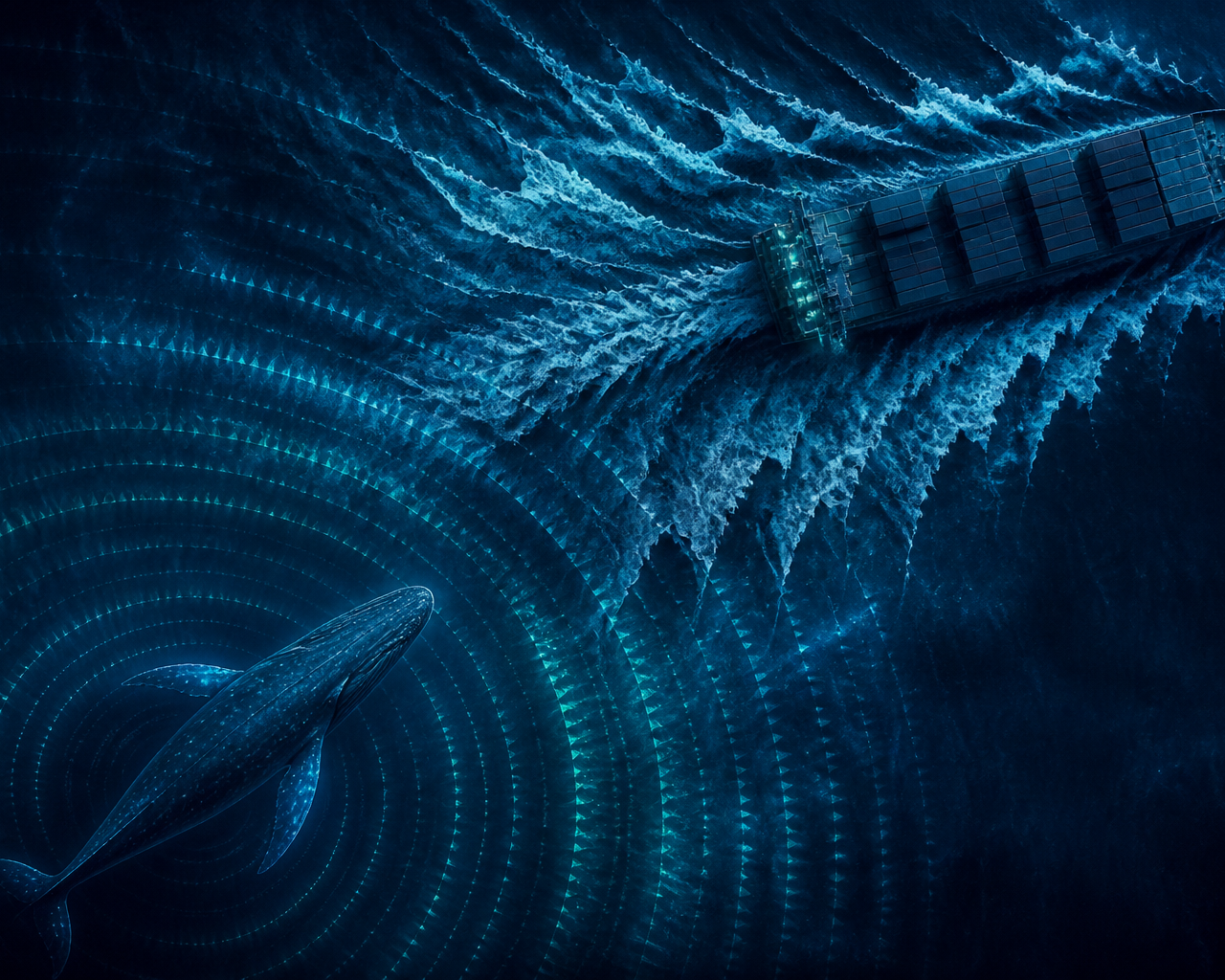
The Night the Ocean Went Quiet
In the early hours of September 11, 2001, as the world reeled from tragedy, a strange and unintended experiment began in the waters of the Bay of Fundy, Canada. With global shipping ground to a halt, the relentless, low-frequency thrum of cargo vessels simply vanished. For Dr. Rosalind Rolland and her team of researchers, who had been studying North Atlantic right whales, the change was immediate and profound. By analyzing fecal samples for stress-related hormones, they discovered a drop in glucocorticoids that had never been seen before.
For the first time, science had a 'smoking gun' proving what many had suspected: our noise was killing the sea.
We often think of the ocean as a 'silent world'—a phrase popularized by Jacques Cousteau—but for its inhabitants, sound is everything. In a medium where light barely penetrates beyond 200 meters, sound is the primary sense. It is the tool for navigation, the medium for courtship, the radar for hunting, and the warning bell for predators. Yet, over the last century, we have filled this realm with an 'acoustic fog.' From the rhythmic pounding of pile-drivers for offshore wind farms to the 190-decibel blasts of seismic airguns used in oil exploration, we have effectively blinded the ocean’s residents using sound.
Why is underwater noise a sustainability issue?
Sustainability is often framed through the lens of what we take (overfishing) or what we leave behind (plastics and CO2). However, the integrity of habitat includes the sensory environment. If a whale cannot hear its calf from five miles away because of a passing container ship, that habitat is functionally degraded, even if the water is pristine and the food is plentiful.
Research published in Science in 2021 by Carlos Duarte and colleagues highlighted that marine noise pollution is a global stressor that is relatively easy to fix compared to chemical or climate pollution—if we have the political will to turn down the volume.
The Architecture of the Anthropocene Soundscape
To understand the scale of the problem, we must look at the different 'dialects' of industrial noise. Low-frequency noise from global shipping is the most pervasive, creating a constant background drone that mask the long-distance songs of baleen whales. At the other end of the spectrum, high-intensity impulses from sonar and seismic testing can cause physical trauma, such as hemorrhaging in the brains of beaked whales.
Comparing Native and Anthropogenic Sound Sources
| Source | Frequency Range | Peak Intensity (dB re 1μPa) | Biological Impact |
|---|---|---|---|
| Humpback Whale Song | 20 Hz – 24 kHz | 170–190 dB | Communication, Mate selection |
| Snapping Shrimp | 2 kHz – 200 kHz | 180–190 dB | Territorial signaling |
| Container Ship | 10 Hz – 1 kHz | 180–190 dB (broadband) | Masking long-distance signals |
| Seismic Airgun | 5 Hz – 300 Hz | 230–260 dB | Temporary/Permanent hearing loss |
| Active Naval Sonar | 1 kHz – 10 kHz | 235+ dB | Mass strandings, panicked ascent |
"We have significantly altered the sensory landscape of 70% of the planet's surface, yet because we cannot hear it from the shore, we treat it as an invisible problem."
The 'Acoustic Fog' and Biological Masking
Biological masking occurs when the 'signal-to-noise ratio' becomes so poor that an animal cannot distinguish vital biological sounds from background noise. Imagine trying to have a conversation in the middle of a construction site; eventually, you simply stop talking. This is exactly what is happening to the Blue Whale. Studies suggest that in some high-traffic corridors, the 'communication space' for blue whales has shrunk by as much as 90%.
The Impact on Carbon Sequestration
It isn't just a matter of animal welfare; it’s a climate issue. Whales are essential to the 'whale pump'—the process by which they dive to depth, feed, and return to the surface to release nutrient-rich waste. This fertilizes phytoplankton, which in turn sequesters roughly 40% of all CO2 produced. By stressing whale populations and disrupting their feeding patterns through noise, we are indirectly weakening one of the planet's most effective carbon capture mechanisms.
Can we engineer a quieter future?
The good news is that unlike plastic, which lingers for centuries, noise pollution stops the moment the source is removed. Scientists and engineers are now collaborating on 'quieting' technologies. These range from bubble curtains used during offshore construction to dampen sound waves, to redesigned ship propellers that minimize cavitation—the tiny bubbles that pop and create the majority of a vessel's noise.
Innovation Comparison: Quieting the Seas
| Technology | Primary Mechanism | Effectiveness | Cost/Complexity |
|---|---|---|---|
| Bubble Curtains | Compressed air rings around pile driving | High (reduces noise by up to 90%) | Moderate; standard in North Sea |
| Propeller Redesign | Computational fluid dynamics to reduce cavitation | Permanent reduction in transit noise | High upfront R&D; saves fuel in long run |
| Slow Steaming | Reducing vessel speed to <12 knots | Significant; 10% speed reduction cuts noise by 40% | Low; requires logistics adjustments |
| Alternative Seismic | Vibratory 'marine vibroseis' instead of airguns | Reduces peak pressure and high frequencies | High; tech still scaling |
Policy and the 'Right to Silence'
Legislation is finally catching up. The EU’s Marine Strategy Framework Directive now includes 'underwater noise' as a qualitative descriptor for Good Environmental Status. In the United States, the NOAA (National Oceanic and Atmospheric Administration) has developed an Ocean Noise Strategy Roadmap. However, the high seas remain a 'Wild West' of acoustics.
- Mandatory Slow Zones: Implementing seasonal speed limits in critical habitats (e.g., the Port of Vancouver’s ECHO program).
- Acoustic Refuges: Designating Marine Protected Areas (MPAs) specifically for their quietude.
- Technological Standards: Requiring 'Quiet Ship' certification for new builds in the global merchant fleet.
"A quiet ocean is not just a luxury for the animals; it is a fundamental requirement for a functioning, resilient marine ecosystem in a warming world."
The Rise of Soundscape Ecology
Today, researchers are using Passive Acoustic Monitoring (PAM) to listen to the heartbeat of the ocean. By deploying hydrophones in the deep, we can hear the transition from a healthy coral reef (a cacophony of snaps, grunts, and whistles) to a dying one (silence). This 'acoustic monitoring' is becoming a vital, cost-effective tool for conservationists to track biodiversity in real-time.
Frequently Asked Questions (FAQ)
Q: Does noise pollution actually kill fish? A: While it rarely kills fish instantly, it causes 'sub-lethal' effects such as elevated stress, loss of hearing sensitivity, and the inability to find mates or avoid predators, which leads to population decline.
Q: Can't marine animals just move away from the noise? A: Some can, but many are tied to specific feeding or breeding grounds. Moving away often means moving into less productive waters, leading to starvation or reduced reproductive success.
Q: How does climate change affect underwater sound? A: Warmer, more acidic water actually transmits sound differently. Ocean acidification, in particular, decreases the absorption of low-frequency sound, potentially making the ocean even 'louder' for the same amount of human activity.
A Call for Sensory Stewardship
As we look toward a sustainable 2050, our vision must extend beneath the waves. We are effectively deaf to the damage we are doing, but the science is clear. Reducing ocean noise is one of the most immediate and impactful 'wins' available to us in marine conservation. It requires no new chemistry and no multi-decade carbon-capture rollout—just a commitment to turn down the engines and let the ocean speak for itself once again.
For a planet that is 70% blue, the future of sustainability is remarkably quiet.
“We have significantly altered the sensory landscape of 70% of the planet's surface without making a sound on land.”
Frequently asked questions
- Why is sound more important than sight in the ocean?
- Light travels poorly in water, disappearing almost entirely after 200 meters, whereas sound travels four times faster in water than in air and can propagate over thousands of miles.
- What is the loudest man-made sound in the ocean?
- Seismic airguns used for oil and gas exploration are among the loudest, reaching peaks of 260 decibels—intense enough to damage the hearing organs of animals instantly.
- How can consumers help reduce ocean noise?
- Supporting brands that utilize 'Slow Steaming' and 'Quiet Ship' certified logistics, and advocating for Marine Protected Areas that include acoustic regulations.